Mandala Coloring Book Kdp Interior
First Impressions: A Delicate, Centered Line Art That Breathes
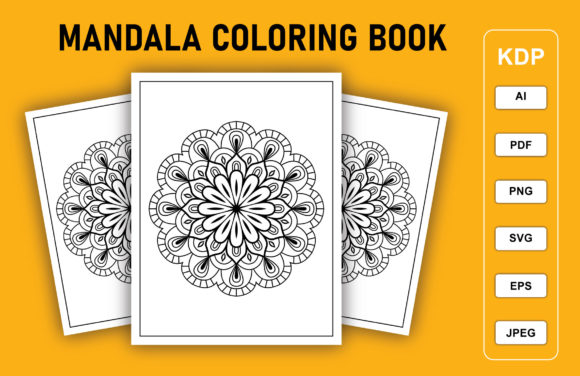
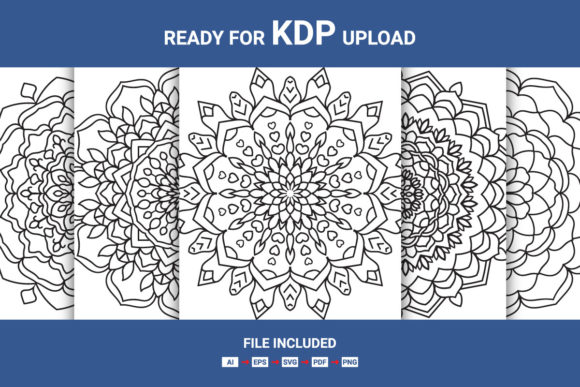
When I opened Mandala Coloring Book Kdp Interior, what struck me wasn’t complexity—it was calm. This is a clean, symmetrical line art mandala built for clarity, not clutter. The outer rings are balanced but not rigid; the inner motifs—petals, dots, gentle curves—flow without overcrowding. It feels meditative, intentional, and quietly versatile. As an embroidery designer who’s stitched hundreds of mandalas for baby onesies, boutique tea towels, and custom aprons, I immediately saw its potential—not as a “busy” focal point, but as a centered, grounding element. It’s the kind of design that works equally well on a linen pillow cover for a yoga studio or a soft cotton tote for a mindfulness retreat.
How It Translates to Real Embroidery Projects
I tested Mandala Coloring Book Kdp Interior as the centerpiece for a small-batch embroidered sweatshirt line—intended for local wellness shops and Etsy. On mid-weight French terry, it stitched cleanly at 3.5" diameter with light tear-away stabilizer. The line weight held up beautifully in satin stitch borders and subtle fill-stitch petals. No thread nesting, no skipped stitches—even on the tighter inner loops. That’s rare for coloring-book-style line art, which often loses definition when converted to machine embroidery.
It also shined on curved surfaces: I digitized a simplified version (keeping core symmetry) for a structured baseball cap front panel. The radial balance meant no visual distortion at the crown seam. For baby embroidery? Yes—scaled down to 2", it retained legibility on 100% cotton interlock onesies, especially with matte pastel threads. And for embroidered patches? Its open negative space made backing and heat-seal application forgiving and professional-looking.
Where It Fits Best—and Where to Pause
- Strong fits: Tote bag design, sweatshirt embroidery, pillow covers, kitchen towels, nursery decor, holiday embroidery (think minimalist Christmas ornaments or solstice-themed gifts), personalized gift items, and boutique branding elements.
- Careful use cases: Avoid dense fill-stitch interpretations on thin or highly textured fabrics like burlap or slubbed linen—the fine lines can blur. On dark fabric, test thread color contrast early; light grays or creams may vanish without a white underlay. Also, skip tight hoop sizes under 4"—the outermost ring needs breathing room to avoid tension pull on delicate corners.
- Not ideal for: Stretchy knits without proper cut-away stabilizer, layered garments (like quilted jackets) where stitch height matters, or products requiring heavy wash durability unless you reinforce with zigzag-edged applique or add a stabilizer layer beneath the fabric.
What It Adds to Your Handmade Product—and What It Doesn’t
Mandala Coloring Book Kdp Interior elevates perceived value without demanding premium pricing. Customers recognize hand-stitched mandalas as thoughtful, intentional work—and this design delivers that impression cleanly. It reads as handmade, not mass-produced, even when stitched on a commercial machine. That builds trust, especially for Etsy sellers and craft fair vendors whose buyers prioritize authenticity.
But it won’t carry weak branding alone. Paired with a subtle monogram or a short phrase (“Breathe,” “Rooted,” “Begin Again”) in a complementary running stitch, it becomes a signature piece. Used solo on a plain black apron? Elegant. Used alone on a busy floral tea towel? It risks getting lost. Context matters—and this design rewards thoughtful placement.
Design Assets That Support Your Craft Business
As a digital embroidery file, Mandala Coloring Book Kdp Interior is a quiet workhorse. It’s adaptable across formats—ideal for printable mockups (I used it in a neutral beige-on-cream flat-lay for my Etsy listing), digital product previews, and layered SVG bundles for crafters who mix embroidery with vinyl or screen printing. Because it’s categorized under Kdp Interiors and Graphics, it’s clearly intended for reuse—but always confirm licensing before bundling it into a paid embroidery pack or selling finished items commercially.
Practical Notes from the Hoop
- Always test on scrap fabric first—especially if using textured or dark materials.
- Check thread colors against your base fabric in natural light; screen previews lie.
- Review stitch density before finalizing: too dense = stiff fabric, too sparse = fragile detail.
- Confirm hoop size compatibility—this design shines between 3.5"–5", but verify your machine’s limits.
- Inspect small details at 200% zoom—look for stray nodes or over-joined paths that cause jump stitches.
- Test in black-and-white mockups to assess contrast and silhouette strength.
- Compare performance on light vs. dark backgrounds—some line weights disappear on deep navy or charcoal without underlay.
- Use proper stabilizer: light tear-away for stable wovens, cut-away for knits or lightweight cottons.
- Verify dual-use rights if planning both personal projects and commercial embroidery—or reselling as part of a digital bundle.
A Design That Serves the Maker, Not Just the Market
At its core, Mandala Coloring Book Kdp Interior isn’t flashy—it’s functional, flexible, and quietly refined. It doesn’t shout. It centers. That makes it perfect for makers who value intention over intensity: the small shop owner curating slow-living goods, the apparel decorator building a cohesive seasonal collection, the hobbyist stitching mindful gifts for friends, or the Etsy seller who knows their customers choose handmade because it feels *human*.
If you’re evaluating this for your next embroidery project, ask yourself: Does it match the mood of the item I’m making? Will it hold up after three washes—and still feel special to the person holding it? Does it leave room for *my* voice as a creator? With Mandala Coloring Book Kdp Interior, the answer—more often than not—is yes.