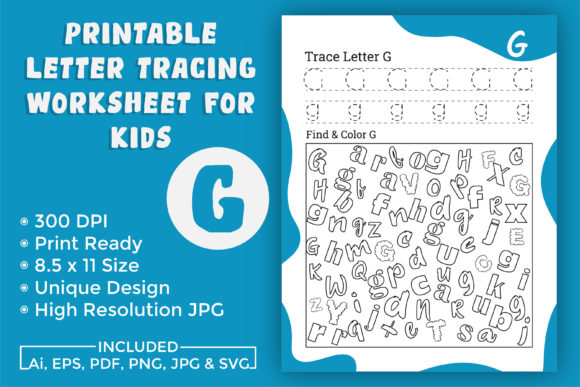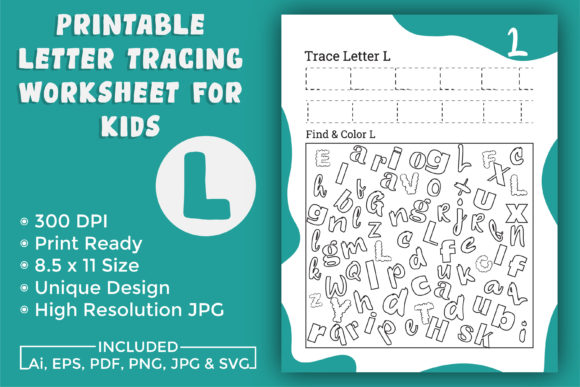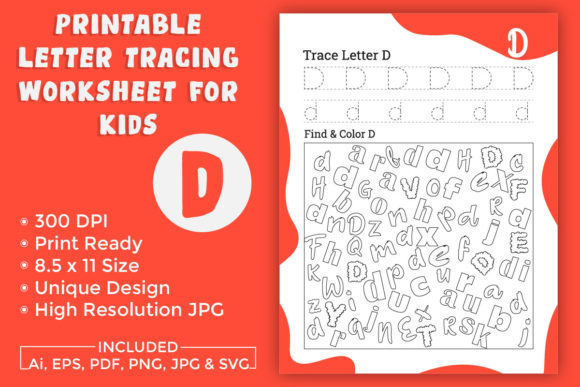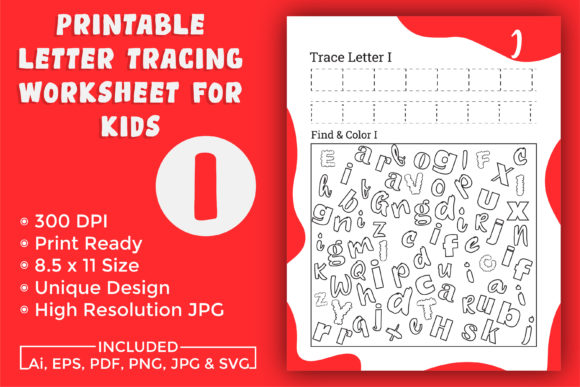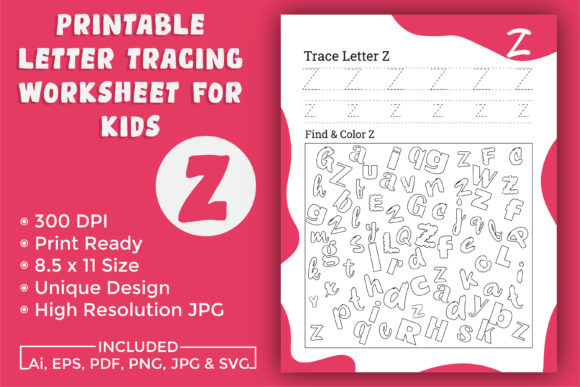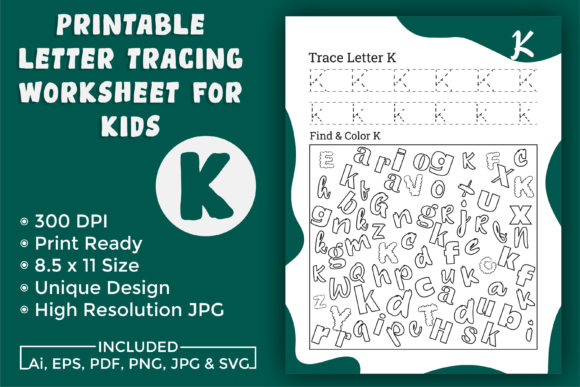
Letter Tracing Worksheet for Kids K: Graphics for KDP Interiors
As a digital product creator who’s launched over 200 printable collections across Etsy, Creative Market, and Shopify — including multiple best-selling preschool learning bundles — I opened Letter Tracing Worksheet for Kids K expecting something functional but generic. Instead, I found a quietly versatile graphic design asset with real commercial legs — if used intentionally.
The first impression? Clean, warm, and age-appropriate without leaning into cutesy overload. It feels like a modern preschool classroom — not too playful, not too sterile. The lines are consistent, the letterforms are clear and developmentally aligned for ages 3–5, and the spacing supports early pencil control. That balance makes it work across niches: Montessori educators, busy homeschool parents, daycare providers, and even boutique nursery brands building cohesive visual identities.
Where This Graphic Design Asset Fits in Real Product Pipelines
This isn’t just another worksheet PDF. As a printable design, Letter Tracing Worksheet for Kids K serves as foundational source material for dozens of high-demand commercial products:
- SVG designs for Cricut and Silhouette users — especially when isolated letters or dotted outlines are extracted cleanly
- PNG designs with transparent backgrounds, ideal for planner stickers, digital scrapbooking kits, or Canva templates
- Sublimation designs on toddler mugs, tote bags, and tumbler wraps — when paired with soft-color mockups and minimal surrounding graphics
- Printable wall art sets (e.g., “Alphabet Learning Corner” bundles) where consistency in line weight and style builds perceived professionalism
- Digital paper packs — using traced letters as subtle repeats or corner accents in themed backdrops
- Social media graphics for parenting bloggers promoting early literacy tools or small business branding content
- Product mockups — think flat-lay photos of tracing sheets beside crayons, wooden pencils, or felt letters to boost Etsy thumbnail appeal
It also slots neatly into seasonal collections: back-to-school starter kits, summer learning challenges, or holiday-themed letter practice (e.g., “J is for Jingle Bells”). Because the base design avoids heavy clipart or dated fonts, it pairs well with serif, sans serif, script, and handwritten fonts — giving you flexibility in Canva template layouts or branded packaging design.
How It Strengthens Your Product Presentation
In crowded creative marketplaces, visual hierarchy and consistency drive trust. Letter Tracing Worksheet for Kids K helps unify a collection because its structure supports repetition — same stroke width, same baseline alignment, same spacing logic. That predictability translates directly to stronger listing images and more cohesive bundle previews.
I tested it in three ways before finalizing a new Etsy product line:
- Thumbnail scan test: At 150px wide, the worksheet remained legible — no blurred edges or vanishing dots. That’s critical for click-through rates.
- Mockup realism check: Placed on a matte white printable mockup and a rustic wood background, it retained clarity and warmth — no contrast issues or transparency glitches.
- Bundle cohesion test: Paired with matching number tracing sheets and shape worksheets, it created an instantly recognizable brand identity — no extra design work needed.
That kind of reliability saves time and strengthens small business branding. Buyers notice when your digital download feels intentional — not assembled from mismatched freebies.
Where to Use It Carefully — and Why
This isn’t a one-size-fits-all illustration. It works best at medium-to-large scale: full-page printables, A4/A5 planner inserts, or SVG cut files sized 3"–6". Avoid shrinking it below 2" for sticker designs — the tracing lines lose definition, and fine motor guidance suffers.
Steer clear of:
- Overly complex layered layouts — the design gains strength from simplicity, not decoration
- Dark background applications without verifying contrast — some letter outlines fade against navy or charcoal unless manually adjusted
- Text-heavy Canva templates — use it as a focal visual element, not background filler
- Cricut projects requiring intricate internal cuts — this is a tracing guide, not a detailed silhouette. Always inspect SVG paths for smoothness and closed vectors before bundling
Practical Seller Notes Before Publishing
Before adding Letter Tracing Worksheet for Kids K to your store, do these five checks:
- Verify file resolution: Confirm it exports at 300 DPI for print-on-demand and physical product use
- Test PNG transparency: Open in Photoshop or GIMP — ensure no hidden white pixels or anti-aliasing halos around letters
- Preview on both light and dark mockups: Not all buyers use white paper — test how it reads on kraft cardstock or pastel backgrounds
- Confirm commercial license scope: Double-check whether redistribution rights cover finished products like mugs or t-shirts — not just digital downloads
- Organize files clearly for customers: Name layers logically (e.g., “K_Letter_Trace_BW”, “K_Letter_Trace_Color”) and include usage notes in your product description
Remember: this asset shines when treated as part of a system — not a standalone item. Pair it with complementary design assets like matching alphabet flashcards, handwriting progress trackers, or editable name-tracing templates. That’s how you build authority in the preschool learning space.
Bottom line? Letter Tracing Worksheet for Kids K is a quiet performer — not flashy, but dependable. It supports handmade business growth by reducing design overhead while maintaining quality expectations. For sellers building out KDP Interiors collections, printable education lines, or commercial-ready graphics bundles, it’s a low-risk, high-flexibility addition — as long as you test it like a real product, not just a pretty file.