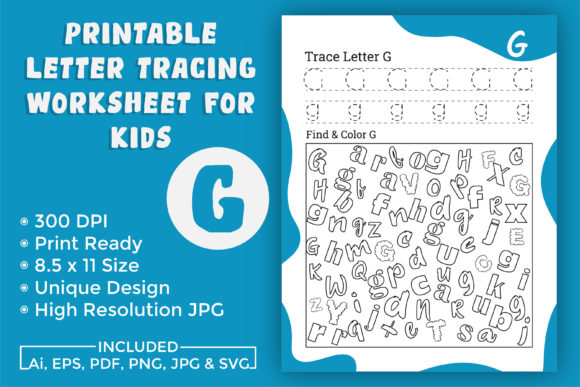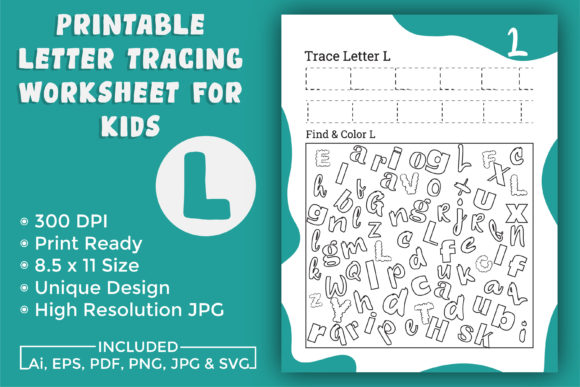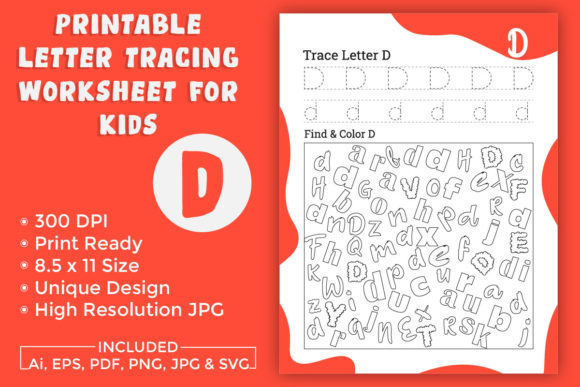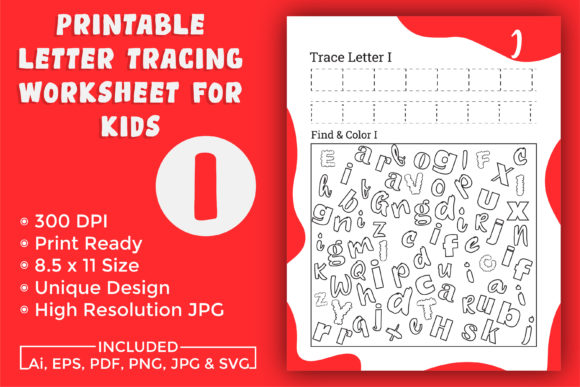
Letter Tracing Worksheet for Kids F Graphics
As a brand designer who’s developed visual identities for over 40 local businesses—from family-run bakeries and indie candle studios to handmade soap makers and seasonal children’s product lines—I recently evaluated the Letter Tracing Worksheet for Kids F as a potential graphic design asset for real-world branding use. Not as a classroom tool, but as a subtle, emotionally resonant decorative element in small business packaging, labels, and promotional visuals.
A Playful, Hand-Drawn Vibe That Feels Warm—Not Cutesy
My first impression? This isn’t cartoonish clipart. The Letter Tracing Worksheet for Kids F carries a gentle, hand-guided rhythm—soft curves, slightly uneven stroke weight, and intentional spacing that evokes early learning without feeling infantilized. It reads as friendly, approachable, and quietly confident: think “local bookstore with a kids’ corner” or “botanical skincare brand launching a limited-edition “First Steps” baby line.” It leans organic and tactile—not sleek or corporate—making it ideal for handmade businesses, boutique stores, and food brands that want warmth without saccharine overload.
Where It Adds Real Brand Value (Beyond the Classroom)
In my recent work for “Hearth & Honey,” a small-batch honey and oatmeal soap brand serving families in Portland, we tested the Letter Tracing Worksheet for Kids F across multiple touchpoints—and it delivered unexpected versatility:
- Product labels: Used as a subtle border accent on 2 oz soap hang tags—paired with a clean sans serif and muted sage green, it added gentle personality without competing with ingredient lists.
- Packaging design: Scaled down and repeated as a faint watermark pattern on kraft paper gift boxes for their “Tiny Hands” sampler set—elevating shelf appeal while reinforcing brand storytelling around growth and care.
- Social media graphics: Integrated into Instagram carousel slides promoting their new “Learn With Honey” educational printables—blending seamlessly with custom illustrations and strengthening visual consistency.
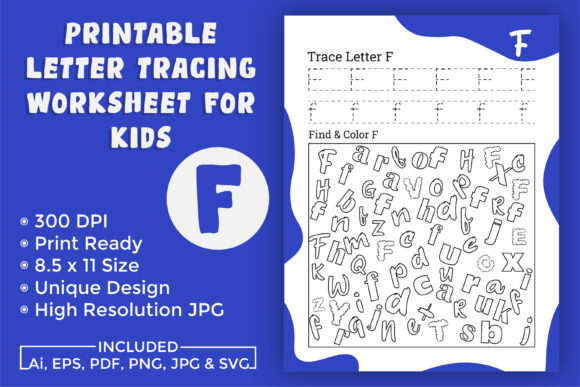
- Thank-you cards & printable inserts: Printed on recycled cardstock inside orders, the Letter Tracing Worksheet for Kids F Printable letter tracing worksheet. Suitable for toddlers, preschoolers the age of three, four, and five years. You can use it to develop your kid’s handwriting and served as both functional content and brand reinforcement—turning transactional moments into memorable, values-aligned experiences.
How It Strengthens Local Business Presentation
This isn’t just decoration—it’s strategic visual shorthand. When applied thoughtfully, the Letter Tracing Worksheet for Kids F supports stronger first impressions by signaling intentionality and care. It improves product recognition through consistent, ownable texture. It builds clearer visual hierarchy when layered behind headlines or used as a framing device. And crucially, it deepens emotional connection—especially for family-focused or community-rooted brands—by evoking authenticity, nurturing energy, and human-scale craftsmanship.
Best Fit: Where This Graphic Design Asset Shines
It performs strongest in contexts where soft distinction matters more than stark minimalism:
- Product mockups for children’s goods, baby products, or family-oriented food items (e.g., granola jars, cookie tins, tea sachets)
- Hero graphics for seasonal campaigns (“Back to School,” “Little Learners Month”)
- Decorative brand elements on tote bags, recipe cards, or boutique shopping bags
- Social media campaign graphics—especially Reels thumbnails and Pinterest pins where warmth boosts engagement
- Boutique visuals like window decals, shelf talkers, or in-store signage with educational themes
Use With Intention—Not Everywhere
This asset isn’t universal. Avoid deploying it in formal corporate branding, legal disclaimers, or ingredient-heavy layouts where clarity trumps charm. It loses impact on very small labels (<1.5" height) or crowded packaging where fine strokes blur. Skip it for luxury minimalist brands (think monochrome ceramics or high-end perfumery), and never place it over low-contrast backgrounds—its delicate lines need breathing room. Most importantly: never let it compete with critical information—price, safety warnings, or allergen statements must always dominate.
Practical Brand Designer Notes Before You Commit
Before integrating the Letter Tracing Worksheet for Kids F into client work or your own small business branding, run these checks:
- Test it on real packaging mockups—not just digital previews—to assess scale, legibility, and tone at actual size.
- Check black-and-white usage: does it retain character when printed without color?
- Preview it beside your brand fonts—does it harmonize with your serif, sans serif, script, or handwritten type pairings?
- Verify PNG transparency and inspect SVG/vector editability if you plan to recolor or resize without quality loss.
- Confirm commercial licensing—especially since it’s listed under Kdp Interiors and Graphics. Ensure it permits physical product sales, packaging use, and client-facing branding (not just personal or classroom use).
- Compare against competitor packaging: does it help your brand stand out—or unintentionally blend in?
- Review print quality on your intended substrate (kraft paper, sticker vinyl, matte cardstock) to avoid muddy edges or stroke dropout.
For local business owners, creative entrepreneurs, and packaging designers building authentic, human-centered brands—the Letter Tracing Worksheet for Kids F is more than a printable design. It’s a quiet, thoughtful tool for adding warmth, intention, and narrative depth to everything from soap labels to seasonal social campaigns. Used with purpose—not as filler, but as voice—it becomes part of your brand identity’s emotional grammar. Just remember: great branding isn’t about using every asset available. It’s about choosing the right one—and using it well.