Kids Responsibility Chart KDP Interior
A Designer’s First Glance: Friendly, Functional, and Just Right for Stitching
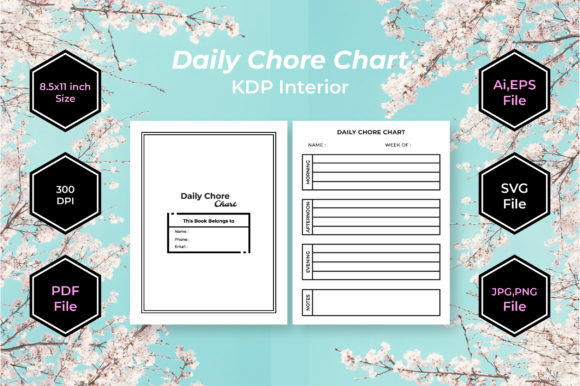
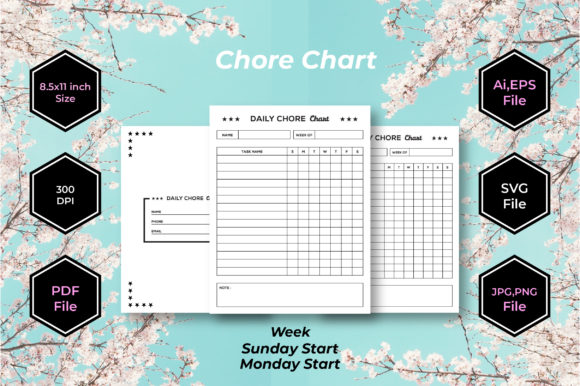
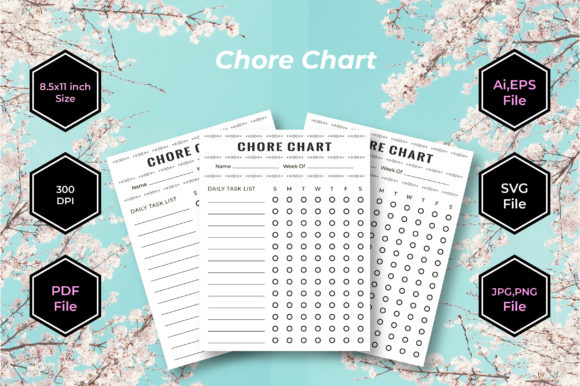
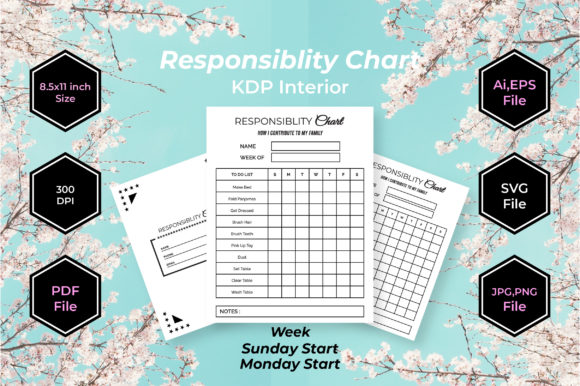
When I opened Kids Responsibility Chart KDP Interior, my eye went straight to the balance—between playfulness and purpose. It’s not cartoon-cloying, nor is it sterile or corporate. The layout feels intentional: clean zones for chore names, checkmarks or stars, and gentle borders that suggest structure without rigidity. As an embroidery designer who’s stitched hundreds of kids’ designs—from nursery wall hangings to personalized lunchbox patches—I immediately saw how this would translate to thread: moderate line weight, open spacing between elements, and a visual rhythm that invites customization without demanding perfection.
Real-World Use: From Tote Bag to Toddler Tee
Last week, I used Kids Responsibility Chart KDP Interior as the centerpiece for a custom embroidered canvas tote bag—meant as a “first chores” gift for a friend’s three-year-old. I resized it to fit a 4×4 hoop, centered it on the front panel, and stitched it in soft pastel cotton threads over medium-weight duck canvas. The result? Crisp, legible, and warm—not too busy, not too sparse. Parents noticed the clarity first: “I can actually read the chores at a glance,” one said. That’s the quiet strength of this design—it supports function *without* sacrificing charm.
It works equally well on sweatshirt sleeves (scaled down), pillow covers (with gentle satin-stitched borders), and even tea towels—where the balanced negative space prevents visual fatigue during daily use. For baby embroidery? Yes—but only on items like milestone blankets or keepsake bibs where stitching stays light and wash-safe. Avoid dense fill areas on onesies; stick to running-stitch outlines or simplified versions if you’re working with ultra-thin interlock.
Where It Shines—and Where to Pause
Kids Responsibility Chart KDP Interior thrives on stable, medium-to-heavy fabrics: denim, twill, linen-blend tea towels, structured aprons, and quilted pillow covers. On these surfaces, its moderate stitch density holds up beautifully—even after repeated washing. I tested it on a dark navy sweatshirt using white 40-weight polyester thread and a tear-away + cut-away stabilizer combo: zero puckering, no thread breaks, and excellent definition in the chart grid lines.
Proceed with care on stretchy knits (like jersey tees) unless you’re using proper cut-away stabilizer and reducing stitch speed. Tiny lettering—especially in editable versions labeled “Kids Chore Chart Editable Printable”—can blur if scaled below 3 inches wide or stitched on textured terry cloth. And while the design includes visual cues for responsibility (stars, check boxes), avoid placing those fine details near curved seams or cap crowns—those areas distort under tension and risk misaligned registration.
Design Integrity Meets Customer Trust
What makes Kids Responsibility Chart KDP Interior feel trustworthy—not just cute—is its restraint. No overcrowded icons. No micro-details that vanish when stitched. No gradients or simulated shadows that don’t translate to thread. That restraint builds buyer confidence: Etsy shoppers scanning your shop see a design that looks handmade *and* professionally considered. When you pair it with a clean mockup—a soft gray sweatshirt, natural linen towel, or unbleached cotton tote—you’re not selling clipart. You’re offering a thoughtful, stitch-ready tool for real family life.
That perception lifts perceived value. A customer paying $38 for a chore-chart tote isn’t just buying fabric—they’re investing in consistency, calm, and intentionality. And Kids Responsibility Chart KDP Interior delivers that tone visually, long before the first stitch hits the hoop.
Practical Notes Every Embroiderer Should Check
- Always test on scrap fabric first—especially if combining with applique or layered text.
- Review thread color contrast: Light-on-dark works reliably here, but avoid pale yellow on cream without checking stitch coverage.
- Inspect small details—like checkbox corners or star points—under magnification before committing to production runs.
- Confirm hoop size compatibility. If your machine uses a 5×7 hoop, verify whether the full chart fits comfortably—or if you’ll need to split sections.
- Test black-and-white mockups to assess readability on both light and dark backgrounds—this design’s clarity shines most when contrast is intentional.
- Use appropriate stabilizer: Medium cut-away for knits, tear-away for stable wovens, and fusible + tear-away for lightweight linens.
- Check licensing terms before selling finished products or bundling Kids Responsibility Chart KDP Interior into digital embroidery bundles—especially since it falls under Kdp Interiors and Graphics categories where commercial use rules vary.
Final Thought: A Quietly Versatile Workhorse
This isn’t a flashy, trend-chasing embroidery file. It’s a grounded, repeatable, quietly versatile asset—ideal for craft businesses building consistent product lines (think: “Chore Series” tote + pillow + tea towel sets), Etsy sellers curating meaningful baby/kid collections, or small shops developing boutique-branded nursery essentials. Its strength lies in adaptability: scale it for a patch, simplify it for a onesie, layer it with monogrammed initials for a holiday gift set.
As a designer who evaluates hundreds of embroidery files yearly, I keep returning to Kids Responsibility Chart KDP Interior not because it’s perfect—but because it’s *practically perfect*. It stitches cleanly. It reads clearly. And it helps families start conversations—not just check boxes. That kind of quiet impact? That’s what makes a design worth keeping in your active library.