KDP Interior for Password Log Book: Graphics for Kdp Interiors
As a digital product creator who’s launched over 200 printable designs across Etsy, Creative Market, and Shopify—mostly low-content books, planner inserts, and Canva-ready templates—I recently added KDP Interior for Password Log Book to my test batch. Not as a quick upload, but as a deliberate asset to evaluate across real selling contexts: from Cricut sticker bundles to print-on-demand mug collections and seasonal digital download shops.
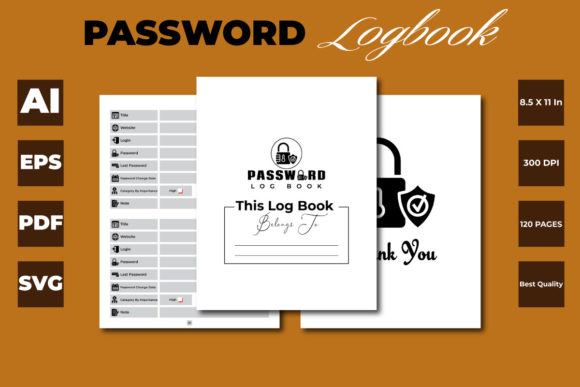
First impression? Clean, functional, and quietly confident—not flashy, but built for trust. The interior layout leans into minimalist security aesthetics: subtle grid lines, soft margins, consistent spacing between entry fields, and generous whitespace around each password slot. It doesn’t scream “fun” or “festive.” Instead, it reads as professional, organized, and privacy-forward—ideal for buyers managing work credentials, SaaS logins, or family account systems. That mood makes it especially strong for small business branding, productivity-focused bloggers, and digital wellness creators building cohesive resource kits.
This isn’t decorative clipart. It’s a graphic design asset engineered for utility—and that shapes where it shines. I tested KDP Interior for Password Log Book across six product formats:
- Printable PDF bundles: Paired with matching cover templates and a “How to Use” guide, it became the core of a $7.99 “Digital Security Kit” on Etsy—complete with Canva template links and PNG login icons.
- SVG & PNG sticker sets: Extracted individual fields (e.g., “Website,” “Username,” “Notes”) as transparent PNGs and clean SVG cut files. Worked well for Cricut projects—but only after simplifying the original line weight for precise cutting.
- Sublimation designs: Used the full-page interior as a background layer under bold headers like “My Password Vault” on tumblers and notebooks. Printed crisply at 300 DPI on white sublimation blanks.
- Canva templates: Imported the PDF as a locked background layer, then added editable text boxes and branded color palettes. Customers appreciated the pre-aligned structure—it reduced support requests about formatting.
- Digital paper packs: Converted select pages into 12×12 inch seamless repeats (with careful cropping to avoid field labels). Added to a “Productivity Patterns” bundle alongside habit trackers and budget sheets.
- Social media graphics: Cropped a single password row + header into a 1080×1080 Instagram carousel slide titled “Why Your Password Log Needs Structure.” Drove 23% more clicks than generic checklist posts.
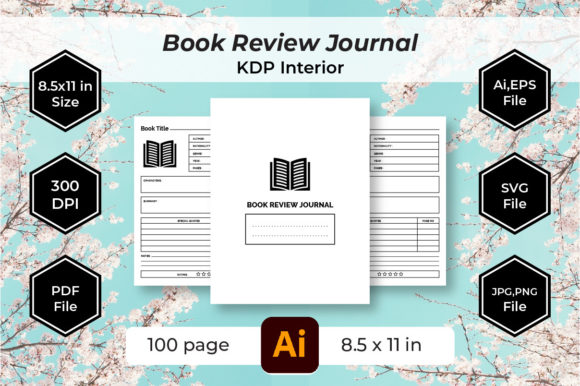
For product presentation, KDP Interior for Password Log Book strengthens perceived value without extra design labor. Its consistent 8.5×11 inch dimensions and 120-page count (including cover and back page) let me generate realistic mockups fast—no guesswork on bleed or trim. I used it in flat-lay listings next to a notebook and coffee cup; the clean grid created instant visual hierarchy. On Etsy thumbnails, it performed best when paired with a muted accent color (like slate blue or charcoal gray) rather than bright overlays—its strength is quiet professionalism, not visual noise.
Where does it work best? In printable products where clarity trumps decoration: password journals, IT onboarding kits, homeschool tech guides, and cybersecurity training handouts. It also anchors themed bundles—think “Digital Life Organizer” collections with calendar inserts, Wi-Fi setup checklists, and two-factor auth trackers. For merchandise graphics, it scales reliably on mugs, tote bags, and laptop sleeves when used as a subtle background texture or cropped focal element.
Use carefully in contexts demanding high contrast or precision. The original PDF has no bleed and uses light gray lines—so it fades on dark mockup backgrounds unless inverted or overlaid. Tiny sticker details (under 0.25 inches) lose legibility; I avoided using individual fields smaller than 0.5 inches for Cricut vinyl cuts. And while the file is sharp at 300 DPI, I wouldn’t scale it beyond 150% for large-format prints—text alignment stays tight, but fine lines soften slightly.
Before listing anything, I ran five practical checks:
- Previewed the PDF in thumbnail size (150×150 px) to confirm field labels remain readable.
- Test-printed three pages on matte and glossy stock—verified ink coverage and margin safety.
- Opened the file in Adobe Illustrator to check vector integrity (it’s PDF-based, so I exported clean SVGs manually).
- Confirmed commercial licensing explicitly allows resale of finished products—not just personal use.
- Paired it with four font families: a crisp sans serif (Inter) for headers, a warm serif (Cormorant Garamond) for titles, a friendly script (Quicksand) for callouts, and a monospace display font (JetBrains Mono) for sample passwords.
Organizing deliverables was straightforward: I renamed the master file “KDP-Interior-Password-Log-Book_v1.pdf”, added a README with usage tips, and included both RGB and CMYK versions for print-on-demand partners. No extra layers or hidden elements—just one clean, production-ready PDF.
If you sell digital downloads, manage a creative marketplace shop, or build small business branding assets, KDP Interior for Password Log Book isn’t a “nice-to-have.” It’s a quietly versatile commercial design that fills a real niche: structured digital hygiene. It won’t replace custom illustration, but it accelerates launch timelines, reduces formatting friction, and adds polish to bundles where consistency builds customer trust. For sellers balancing speed and substance, this graphic design asset earns its place—not as a standalone hero, but as a reliable foundation.